

Could Paramount Launch a Hostile Takeover of Warner Bros. Discovery?
The media industry is no stranger to consolidation, but the prospect of a true hostile takeover in today’s environment would be extraordinary. Hostile takeovers were much more prominent in the 80’s and 90’s, well before I started my career in finance. While no such bid has been formally announced as of December 10, 2025, the idea of Paramount Global (backed by Skydance and its investors) attempting to acquire Warner Bros. Discovery against the wishes of its board has been discussed in financial circles. Here’s how such a move could play out, focusing on the three primary hostile takeover tactics: the tender offer, the proxy fight, and the creeping takeover.
- The Tender Offer – Going Straight to Shareholders
The most direct and common method is a tender offer. In this scenario, Paramount would publicly announce that it is willing to purchase Warner Bros. Discovery shares directly from shareholders at a fixed price that is typically a meaningful premium to the current market price. Doing this, they give a specific deadline.
If enough shareholders (usually more than 50%) accept the offer and “tender” their shares, Paramount would gain control of the company regardless of what the board of directors thinks. The board cannot block shareholders from selling; their only real leverage is to convince investors that a better long-term outcome exists by staying independent or pursuing an alternative deal, like the Netflix offer.
A successful tender offer requires two things: a compelling price and a belief among shareholders that the current strategy is failing
- The Proxy Fight – Replacing the Board
If a tender offer stalls or the board erects strong defenses, Paramount could launch a proxy fight. This involves soliciting shareholders’ votes to replace some or all of Warner Bros. Discovery’s directors with nominees who support the acquisition.
Proxy contests are expensive, public, and lengthy (often lasting several months), but they can pressure a board to negotiate or remove obstacles like a poison pill. They are frequently used alongside a tender offer to increase the odds of success.
- The Creeping Takeover – Quiet Accumulation
A quieter path is the creeping takeover. Paramount (or its financial backers) could gradually purchase Warner Bros. Discovery shares in the open market. Once ownership crosses 5% in the U.S., a Schedule 13D filing is required, alerting the market. Continued buying can eventually build a large blocking position or even a controlling stake if the stock remains depressed and defenses are weak.
This approach avoids an immediate confrontation but still signals intent and can make a later tender offer or proxy fight easier.
Why This Matters for Investors, Creators, and Audiences
Control of Warner Bros. Discovery means control of one of the world’s greatest content libraries: HBO’s prestige dramas (Game of Thrones, Succession, The Last of Us), the DC Comics universe, Harry Potter, Dune, Lord of the Rings, the classic Warner Bros. film catalog, CNN, Discovery reality programming, and much more. Whoever owns it instantly gains enormous leverage in streaming, licensing, and theatrical windows.
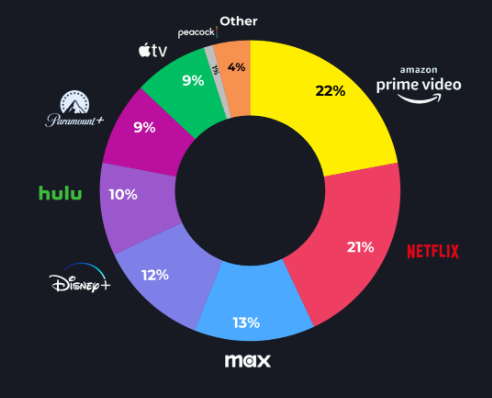
Netflix doing the deal may come with a tradeoff; Disney’s acquisition of Fox already reduced the number of major studios releasing wide theatrical slates, contributing to fewer movies in theaters each year. The Netflix partnership option could accelerate the shift of titles straight to streaming and cause more movie theater closures.
For investors, the outcome will hinge on price and execution. For the rest of us, it will shape what we watch, how we watch it, and how many choices we actually have in an industry that keeps getting consolidated.
Thank you for reading. Please review our disclosures.
.png)

Subscribe to our Newsletter and Receive Important News & Updates.

Foundation Wealth & Tax Advisors is a Fee-Only, Fiduciary, Independent Financial Advisory Firm.
Check the background of your financial professional on FINRA's BrokerCheck.
The content is developed from sources believed to be providing accurate information. The information in this material is not intended as tax or legal advice. Please consult legal or tax professionals for specific information regarding your individual situation. The opinions expressed and material provided are for general information, and should not be considered a solicitation for the purchase or sale of any security.
We take protecting your data and privacy very seriously. As of January 1, 2020 the California Consumer Privacy Act (CCPA) suggests the following link as an extra measure to safeguard your data: Do not sell my personal information.